
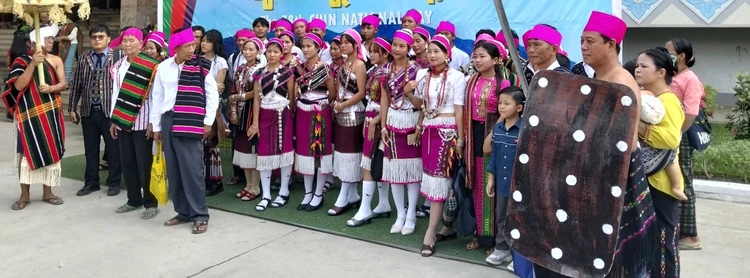
This photograph is a proud and historic record that showcases the rich cultural heritage and unity of the innovative and proud Kanise Khumi ethnic people to the world.
A Historic Milestone: This image captures the active participation on behalf of the Samee Regional Social Association during the occasion of the 78th Chin National Day, which falls on February 20, 2026.
The Artistic Elegance of the Kani Khumi: It portrays a group of young artists from the Kanise Khumi tribe—the pride of the Samee region in southern Chin State—harmoniously gathering for a group photo in front of the stage, preparing to honor the festival with their sacred traditional dances.
Elegant and Splendid Traditional Attire: The male and female tribal members are adorned in matching bright pink turbans, exquisitely crafted traditional Kani Khumi Jain Hpone ethnic dresses, and silver ornaments. In the front, a man holds a traditional sword and shield, embodying the courage and warrior spirit of the Khumi people. On the far left, an elder holding a traditional royal umbrella stands as a symbol of guiding and preserving their customs.
The Background Banner: Behind the group, a large sky-blue vinyl banner featuring the iconic Chin "Hornbill" bird and the text "(၇၈) နှစ်မြောက် ချင်းအမျိုးသားနေ့ - The 78th Chin National Day" further amplifies the grandeur of the festival.
This image stands as a testament to the beautiful unity of the Kanise Khumi people, who are elevating the dignity of their tribe while passionately preserving their literature, language, and cultural traditions.
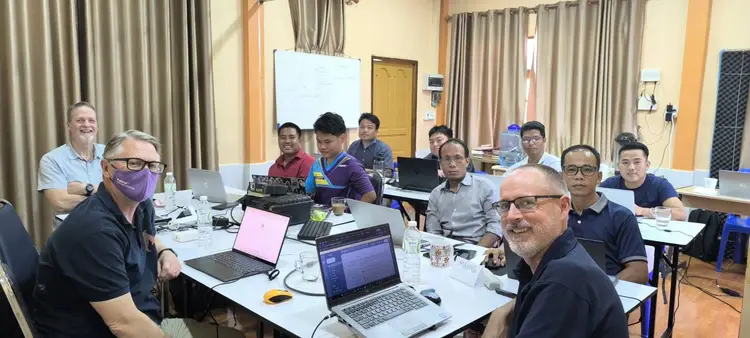
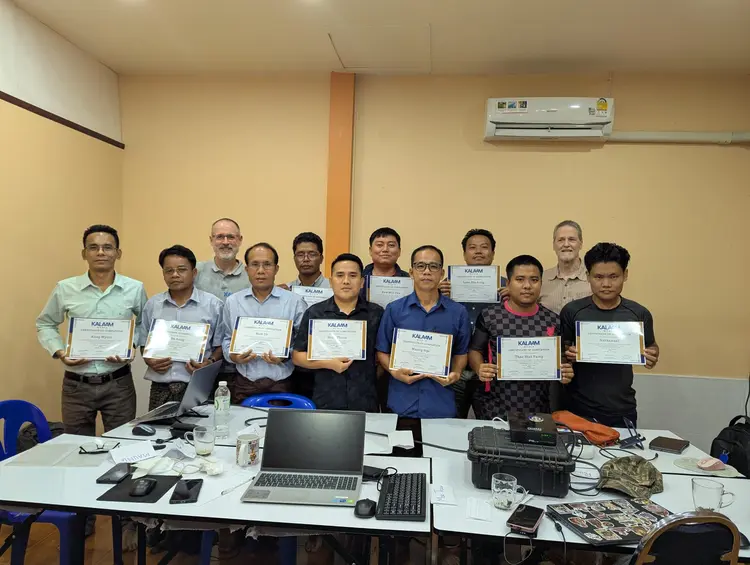
A Historic Graduation Record for the Tribe's New Technology Sector
This photo is a proud graduation memory of the trainees and instructors who represented and successfully completed the website technology training held in Mae Sot, Thailand, from May 28 to June 4, 2026, on behalf of the Kanise Khumi tribe.
In this training, U Yan Oke was specially commissioned and sent to study in order to successfully build the tribe's own website, which will showcase the literature, culture, and information of the Kanise Khumi tribal members to the world. Now, with their respective graduation certificates earned through their hard work and dedication, the trainees are enthusiastically stepping onto a new technological path.
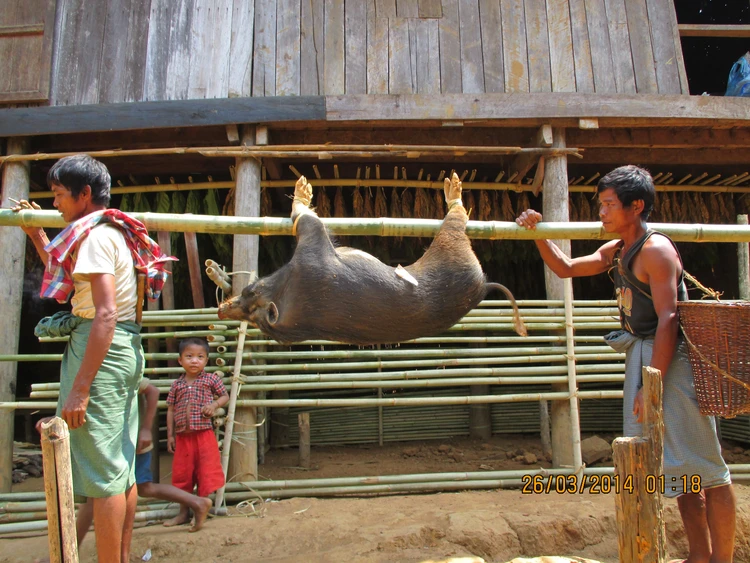
This photo depicts a traditional lifestyle scene in a rural area or an ethnic village in Myanmar, showing a pig being carried using a bamboo pole.
The following details can be seen in the image:
- The People: It features two men wearing traditional longyis. The man on the left has his paso (longyi) tucked up around his waist (khatoun-chaik style) and has a cloth or scarf resting on his shoulder. The man on the right is carrying a traditional woven basket (pa-laing) on his back.
- The Pig: A black pig is tied by its legs and carried upside down on a large bamboo pole. This could be intended for meat for a village festival, a donation ceremony, or the result of a hunt.
- The Background: In the background, there is a traditional wooden house built with bamboo poles, or a hut where straw/tobacco leaves are being dried.
It is known that this photograph was taken on March 26, 2014.
The Beauty of Traditional Collective Labor and Unity
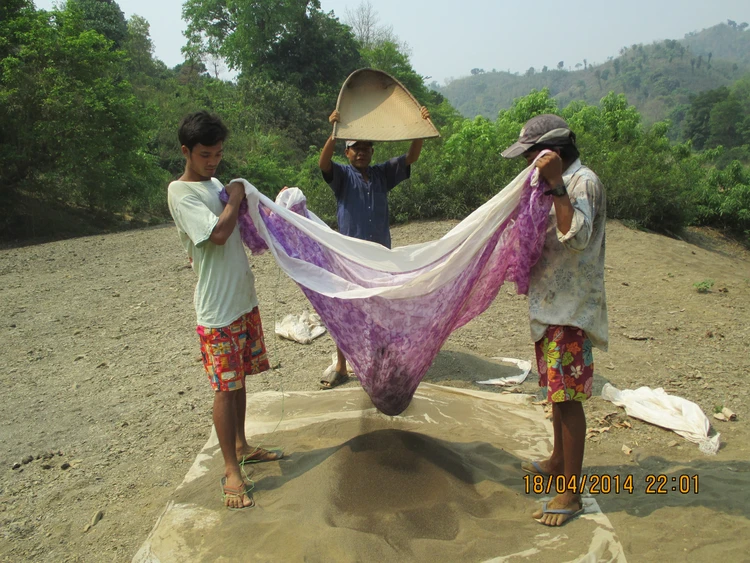
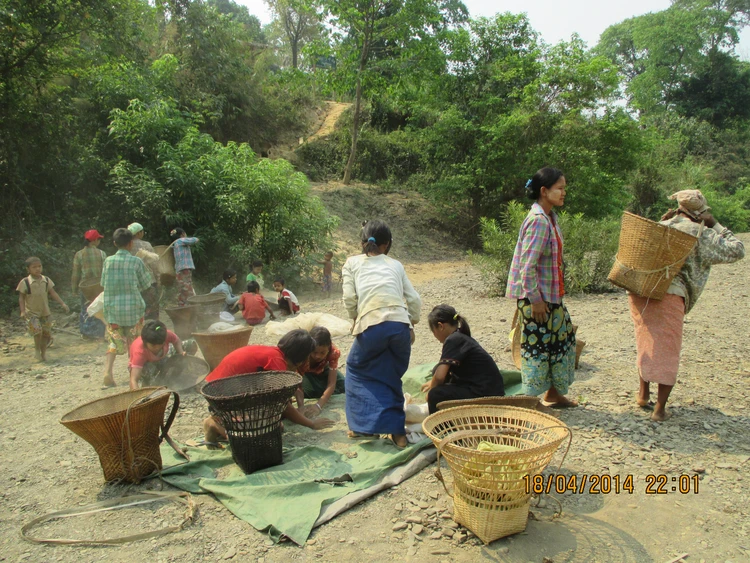
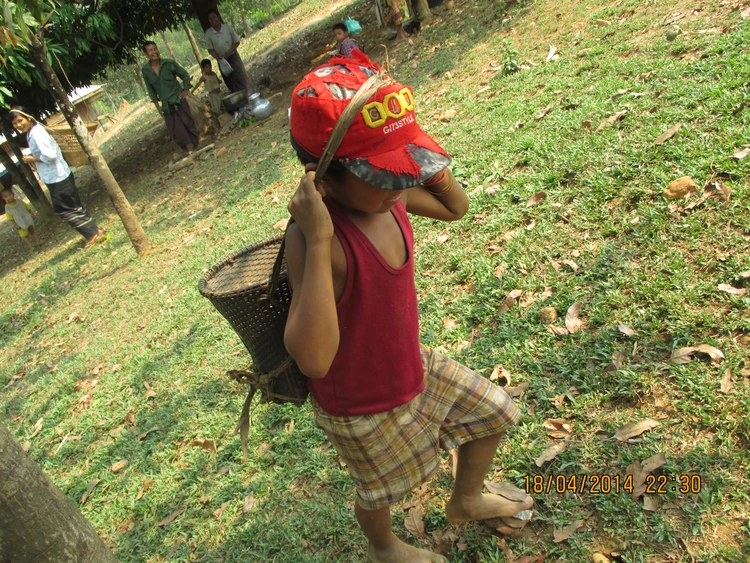
This photo is a meaningful and poetic record highlighting the beautiful, unified lifestyle of the rural Samee region in southern Chin State, showcasing the traditional custom of the Kanise Khumi ethnic people as they actively participate in the development of their local area.
- The Power of Collective Labor: This scene depicts the ethnic men and women of the rural southern Chin State combining their strength at a riverbank to help build a village structure or a religious building. It clearly reflects the lovely spirit of the locals, who help and support one another like a family.
- Sifting Sand and Gravel: The villagers, including women and children, are cheerfully working together on the rocky riverbank, using traditional woven bamboo baskets (pa-laing) and sieves to sift and collect the sand and gravel needed for construction.
- Natural Beauty of the Countryside: The lush, green mountain scenery in the background, the gravel-filled riverbank landscape, and the simple, peaceful images of the ethnic people with Thanakha brushed on their cheeks portray a perfect harmony between nature and humanity.
- Time Stamp: According to the text at the bottom right of the photo, this precious record of collective labor was captured on April 18, 2014. It stands as a historic and memorable image of the community coming together out of goodwill for the benefit of their village during the summer period right after the traditional Water Festival (Thingyan).
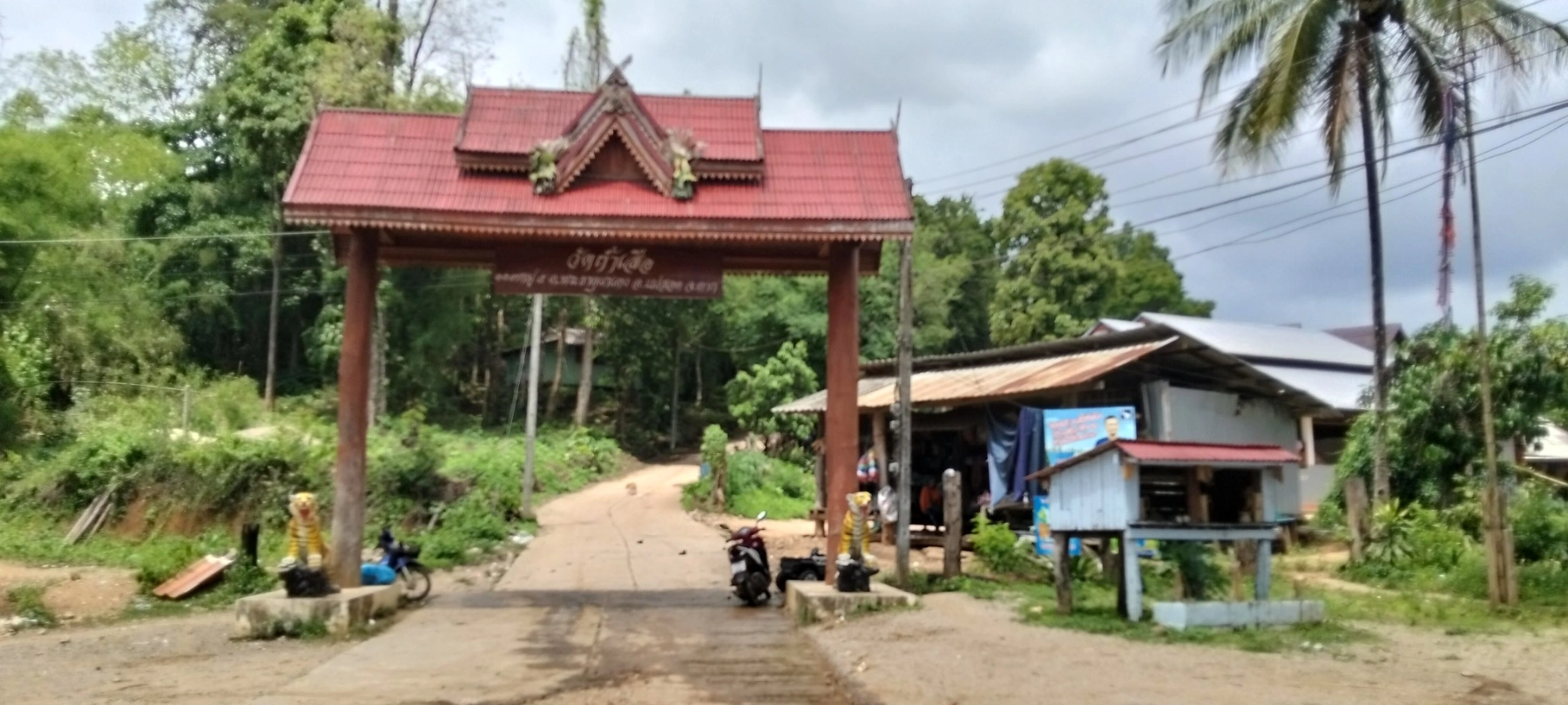
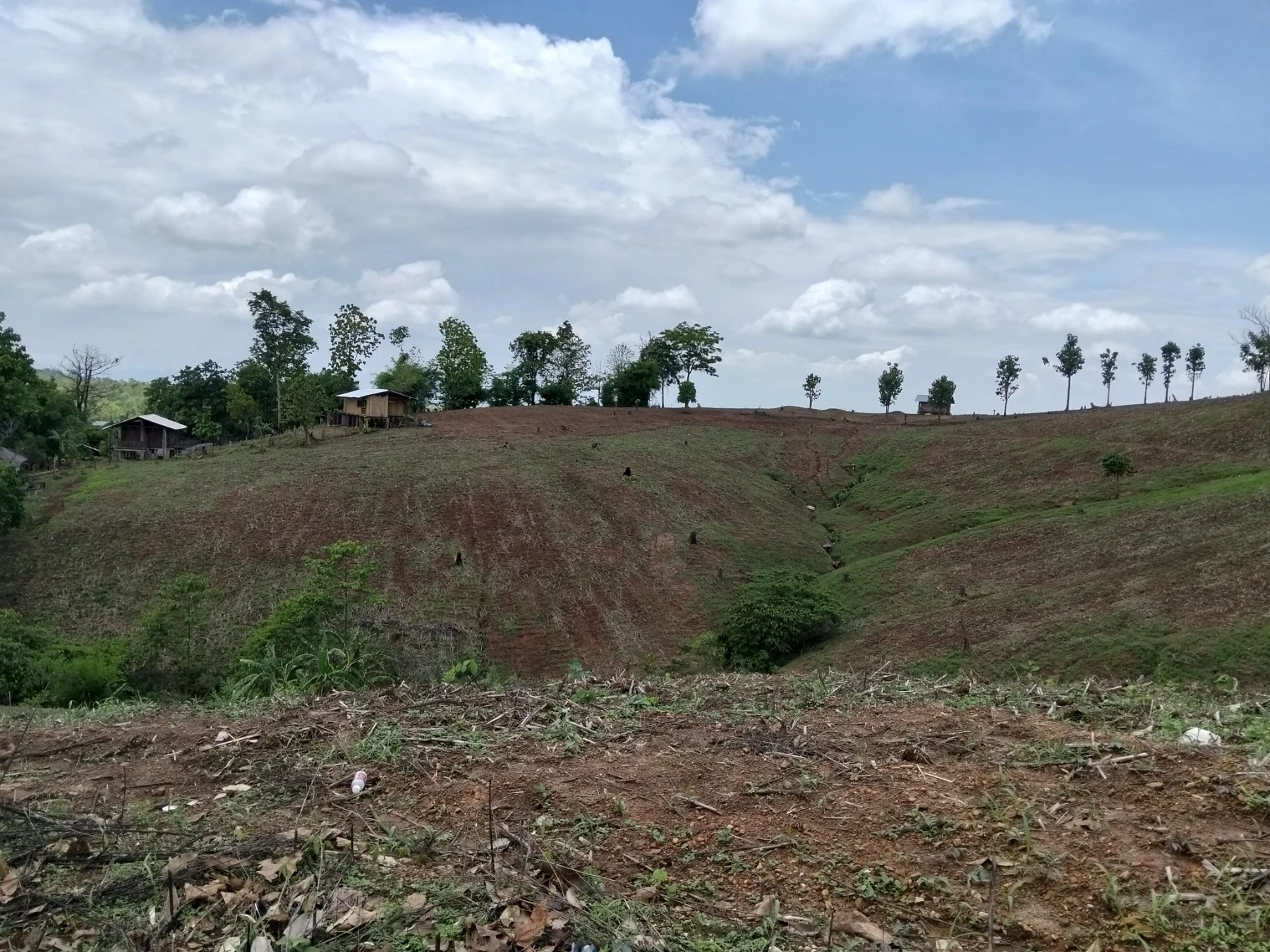
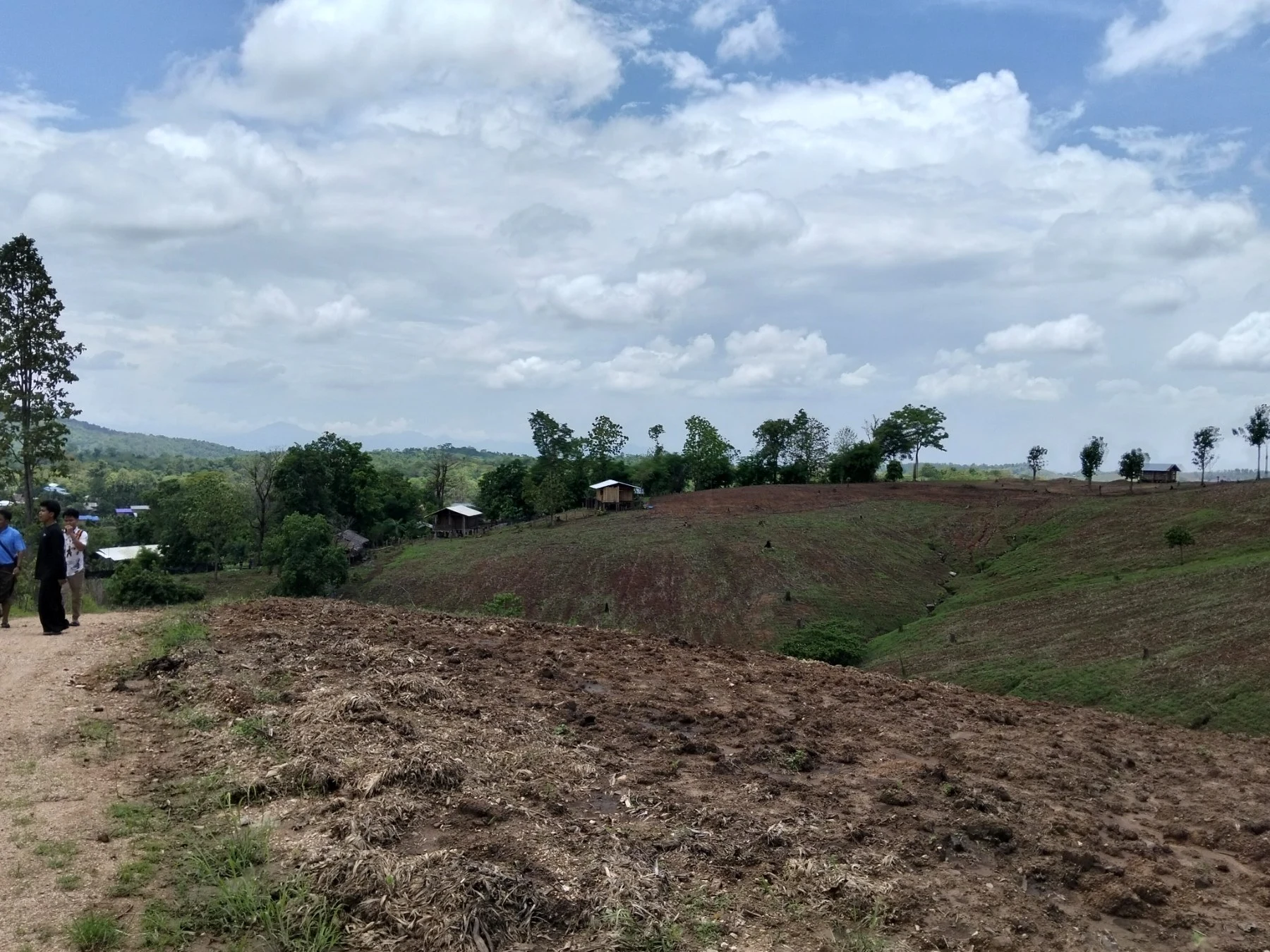
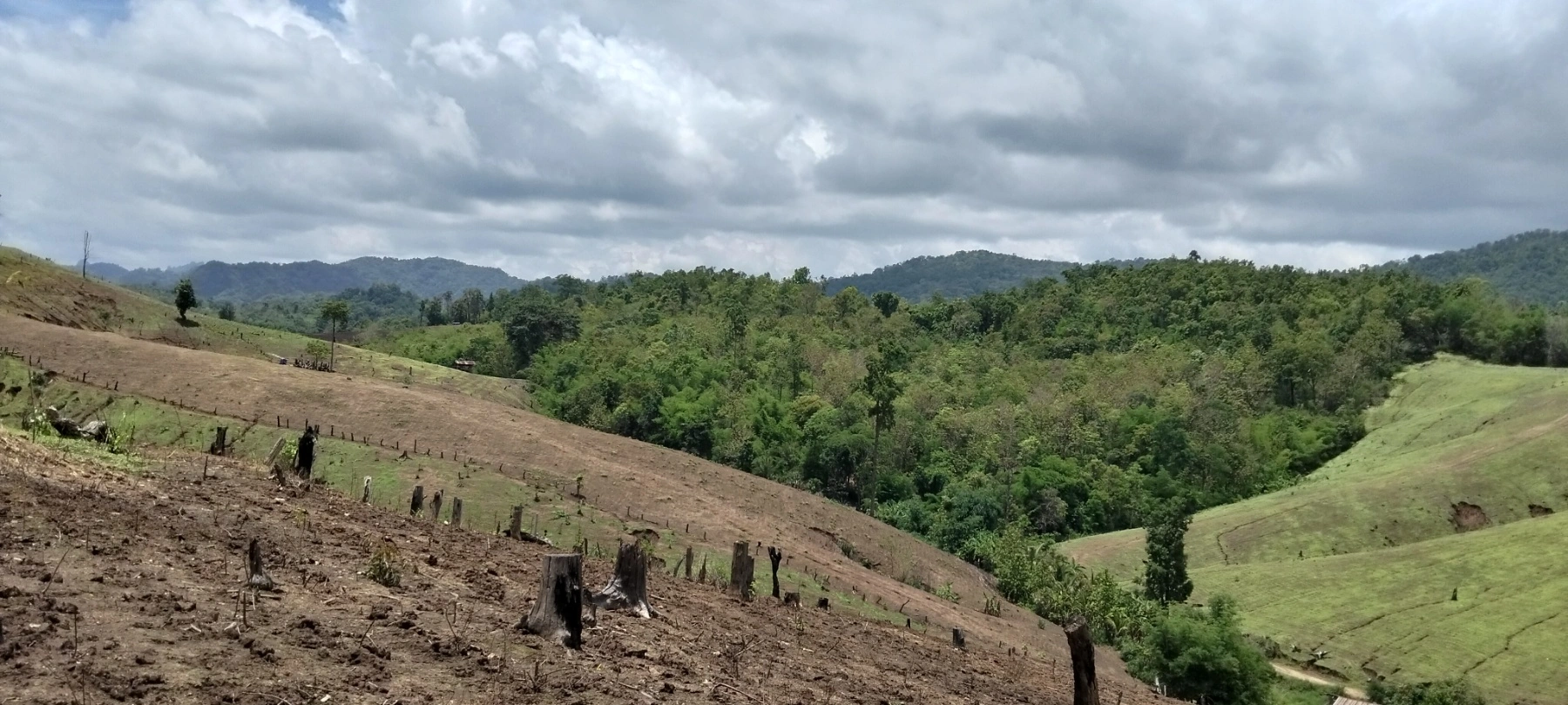
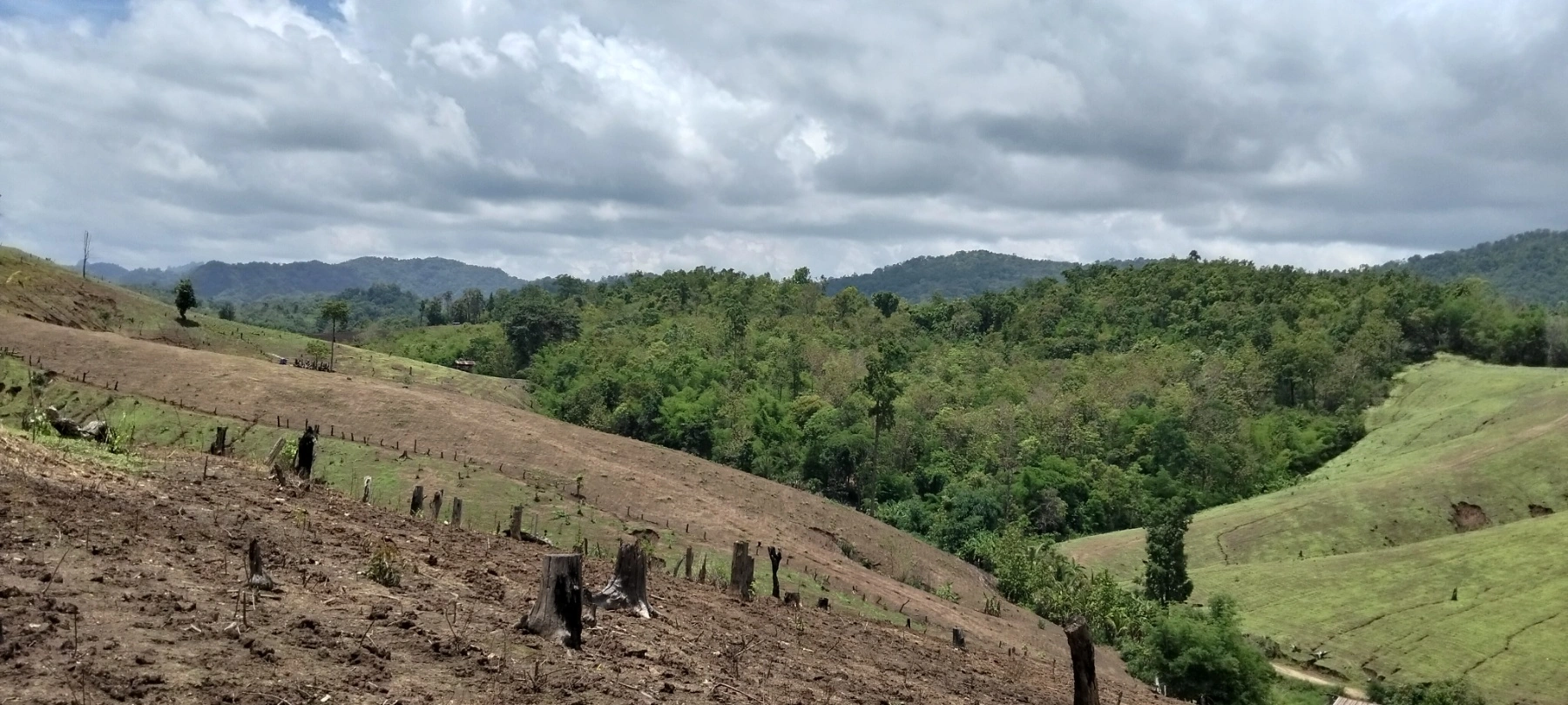
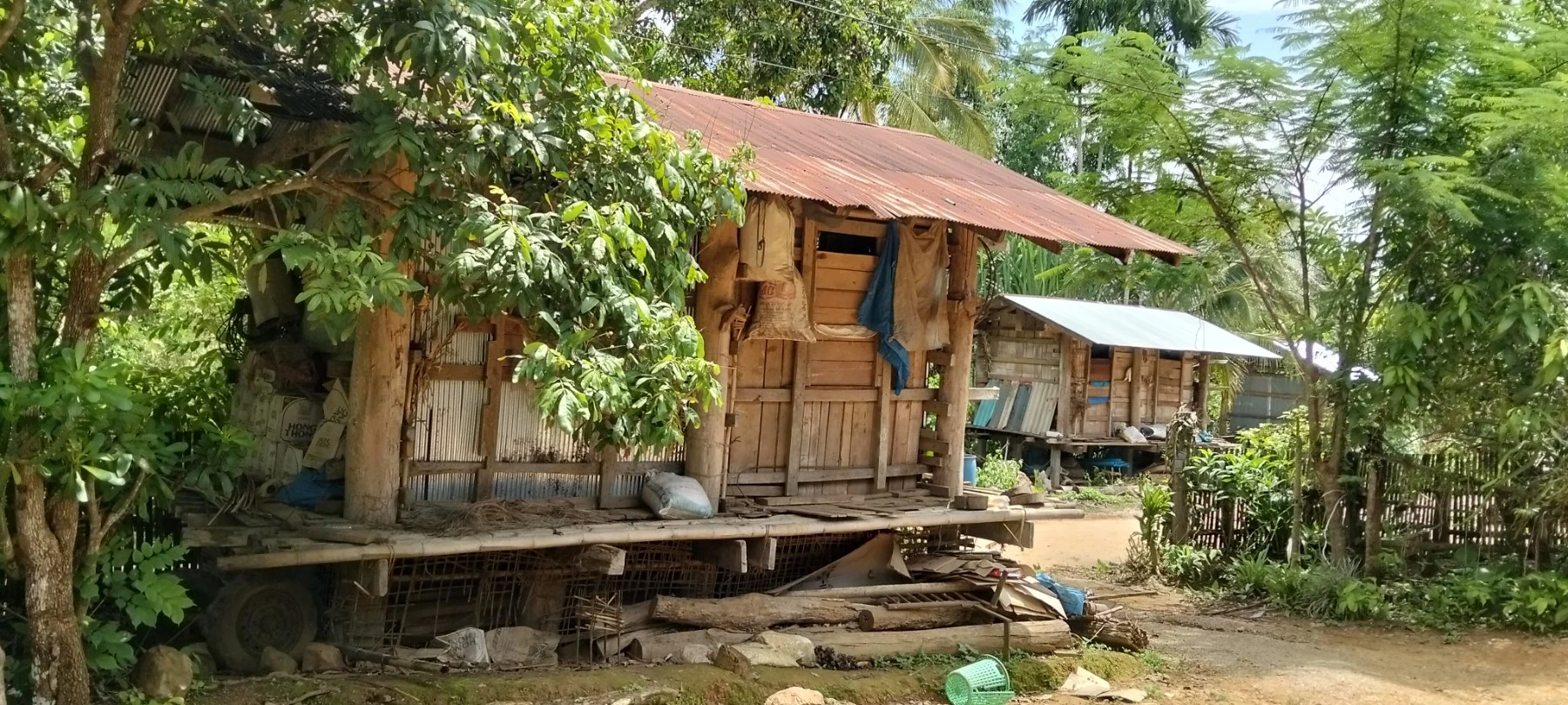
The Beauty of Rural Life Rooted in Nature and the Motherland
- Cornfields and Landscapes (Figures 2, 3, 6): Against the backdrop of lush, green mountain ranges, the red hillside fields and terraced plantations carefully cleared and prepared for cultivation represent the primary lifeblood of the countryside. The combination of fluffy white clouds drifting across a blue sky and the rich earth creates a simple yet breathtaking scenery. The small huts scattered here and there on the hills serve as sanctuaries for the shifting cultivators who depend on nature for their livelihood.
- Traditional Construction and Homes (Figures 4, 5): The traditional rural homes and small crop barns (granaries) built primarily from wood and bamboo reflect the local way of life. A large two-story wooden house built with sturdy log pillars and surrounded by green foliage offers a sense of peace and warmth. Meanwhile, the wooden plank huts with corrugated iron roofs further define the honest, tranquil essence of the countryside.
These images beautifully portray the Thai countryside—capturing the locals' unpretentious and simple daily lives, their serene and peaceful environment, and their industrious spirit.
